
Not all laser resurfacing is the same
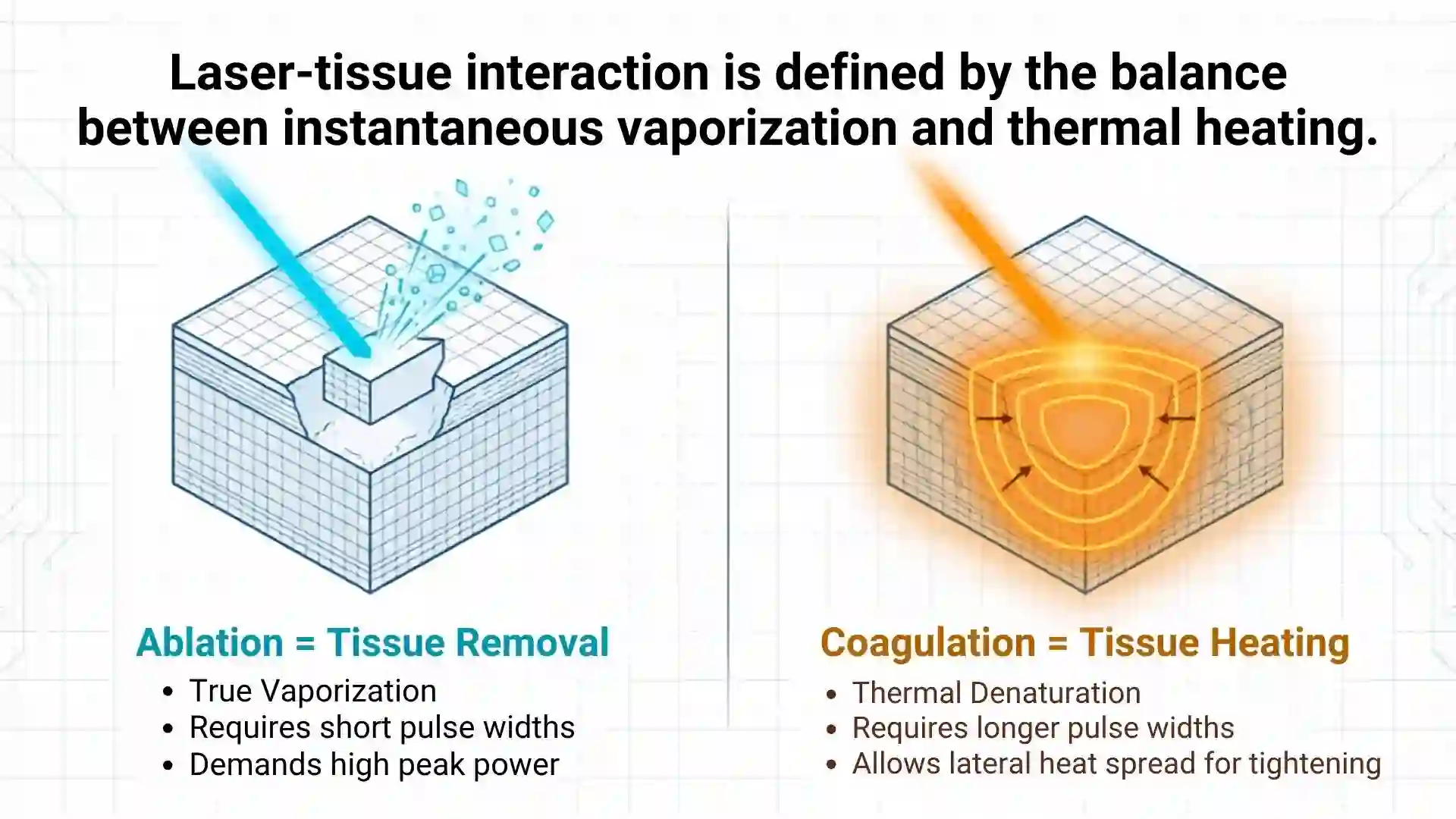
The terminology around laser resurfacing can be confusing (e.g CO2, Erbium, Fraxel, ablative, non-ablative, fluence, etc).
The first concept to understand is that different types of laser wavelengths are absorbed differently. Some lasers like the Erbium Yag laser transfer almost all of their energy into ablation. As a result of this instant ablation, it usually can’t go very deep and does not produce much heat. This is good for rapid healing but not as good for skin tightening and smoothing. CO2 lasers, on the other hand, ablate and produce heat because their energy is not absorbed as efficiently. This heat is good for producing collagen but can take much longer to heal. UltraClear is our newest laser and is a big advance because it creates controlled, engineered heat that be tuned to produce the results we want while optimizing healing, which is something older lasers were not capable of. For older lasers, the only way to reduce heat would be to decrease the energy or fluence of the laser, which would make less heat but also produce less results. With UltraClear, we can create more heat at deeper depths and less heat at shallower depths, which is important for healing and especially important with skin of color.
Other important concepts are those of ablation and fractionation. A treatment may be ablative or non-ablative. It may also be fractional or fully ablative. These terms describe different aspects of the treatment.
Ablative resurfacing
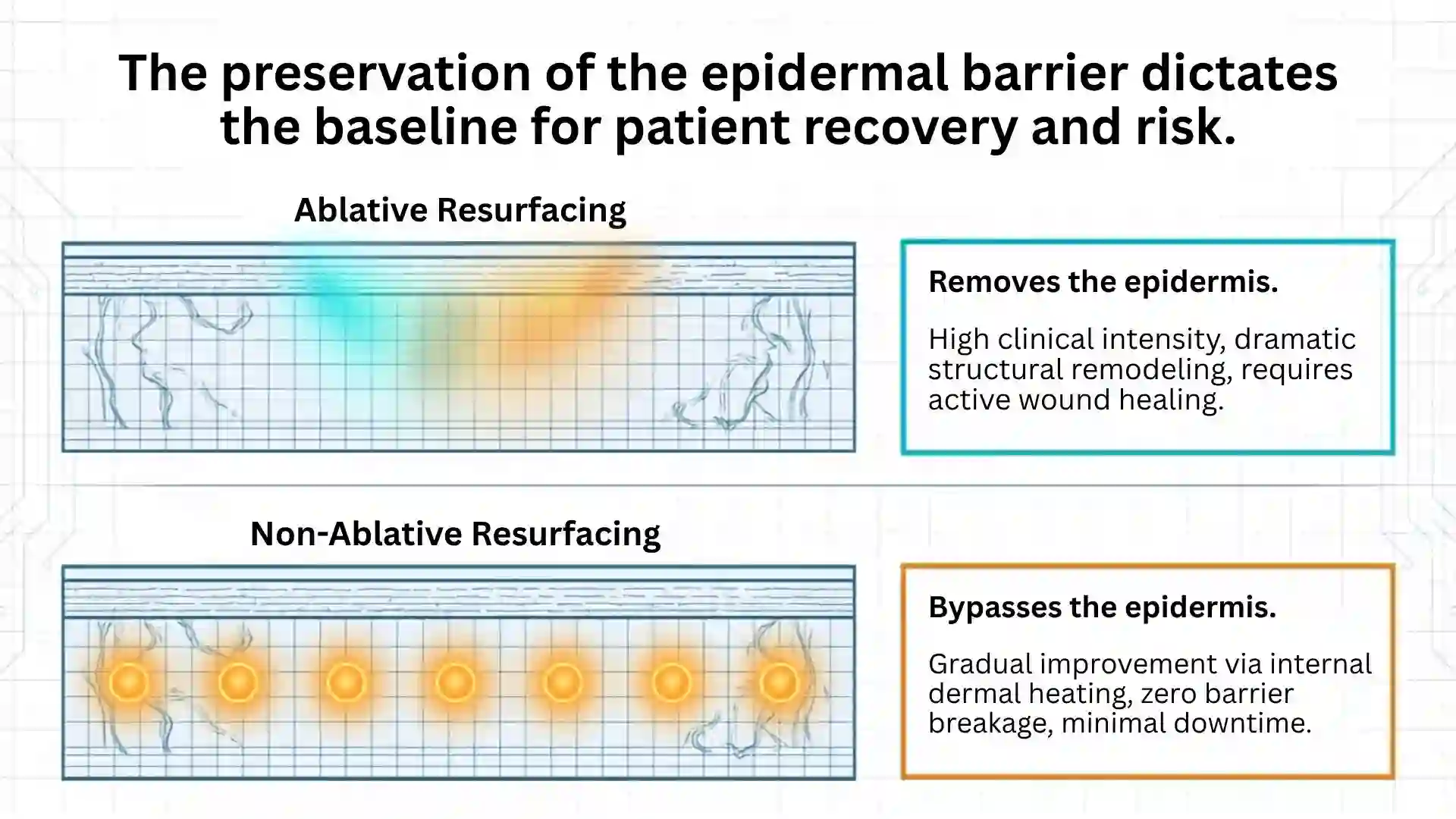
Ablative lasers remove or vaporize part of the skin’s surface. They can create more visible improvement in wrinkles, texture, scars, and sun damage, but usually involve more healing time.
Non-ablative resurfacing
Non-ablative treatments deliver energy below the surface while largely preserving the outer skin. Recovery is usually shorter, but a series of treatments is often needed to create meaningful change. Non-ablative resurfacing produces controlled thermal injury in the deeper skin while preserving the epidermis.
Fractional resurfacing
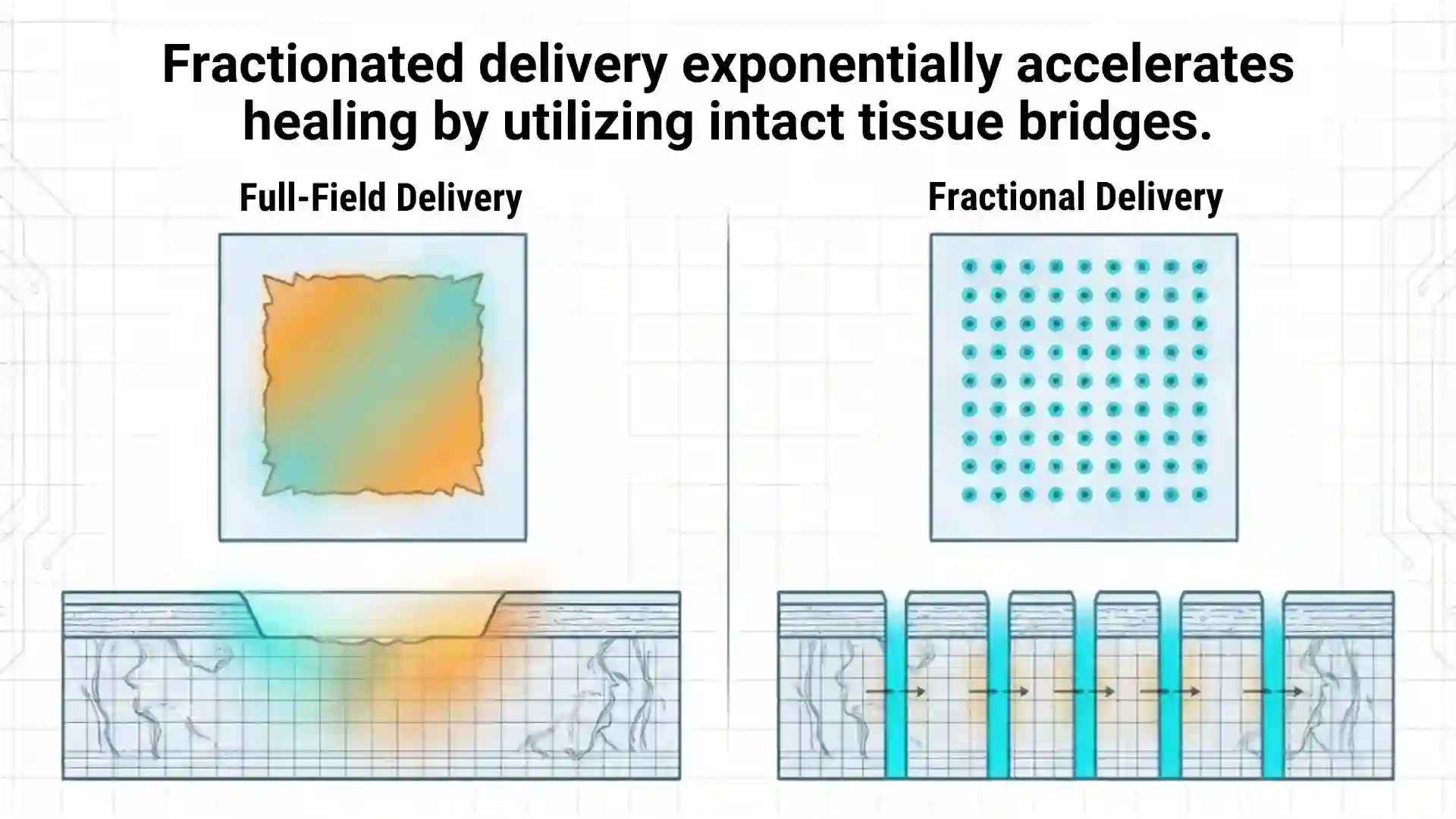
Fractional treatments treat microscopic columns or zones of skin while leaving untreated skin between them. Because only a fraction of the surface is treated during each pass, the surrounding skin helps the treated areas heal more quickly. Fractional treatments can be either:
- fractional non-ablative
- fractional ablative
Fully ablative resurfacing
Fully ablative resurfacing treats the complete surface of the selected area rather than isolated microscopic columns. It can produce substantial improvement, but it also involves the most significant recovery and aftercare.
Hopefully, this short synopsis explains a little bit about why we might choose a specific laser for your condition.
Dr. Nakatsui